Custom embroidered
patches, made to outlast the jacket.
Raised thread on heavyweight twill, wrapped in a merrowed edge. We match your colors to Pantone codes, send a free mockup within 24 hours, and save your approved design so every reorder starts from it.
- Free 24-hour mockup
- No setup fees
- Free US shipping
- 25-piece minimum
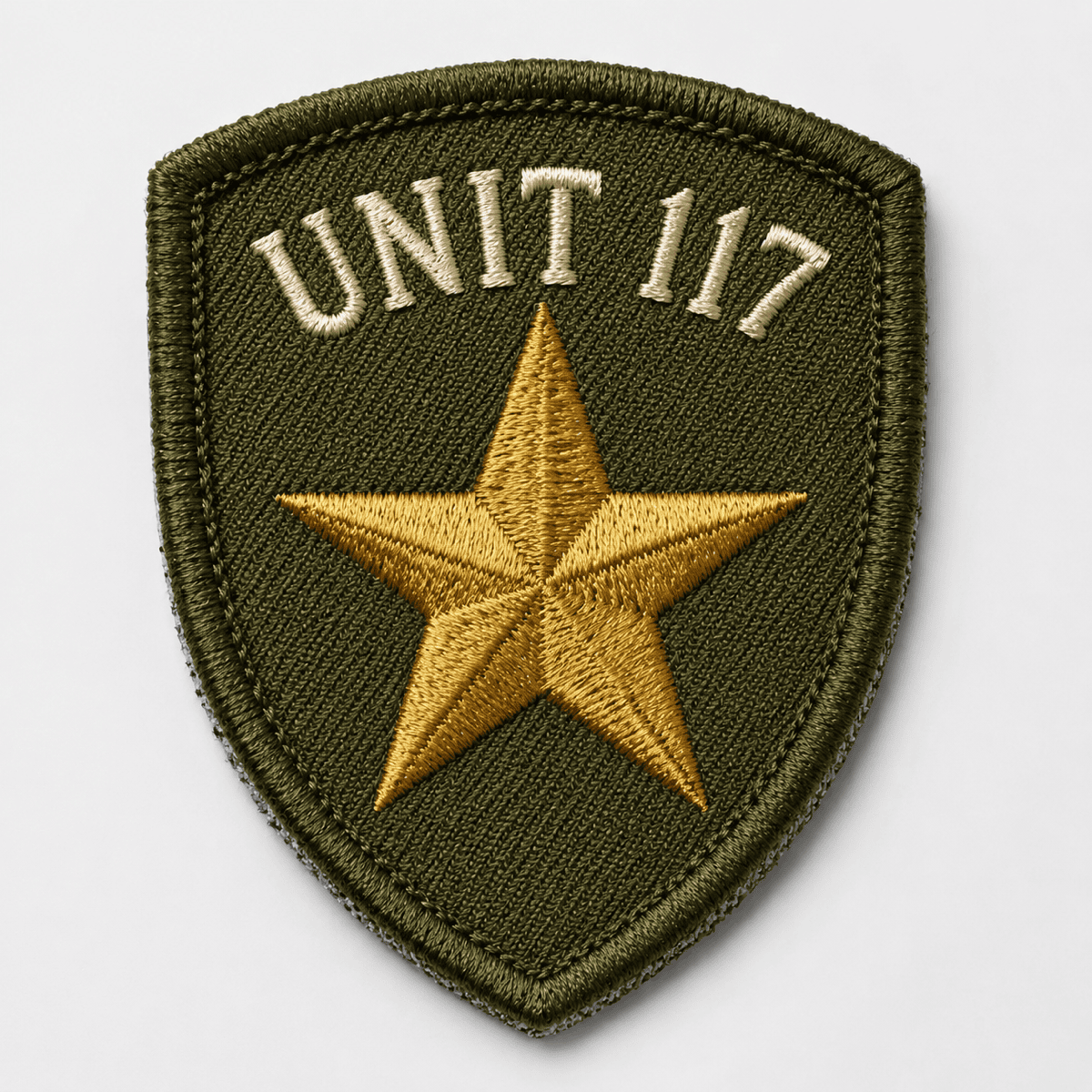
Embroidered patches are raised thread stitched onto twill and finished with a merrowed edge, made factory-direct. A 3 inch patch is $3.90 each at 100 pieces, sew-on, with digitizing and US shipping included. The minimum is 25 pieces. Expect about 4 to 5 weeks to your door with prompt approvals: a free Digital Mockup within 24 hours, then one real Production Proof patch before we make the rest.
Thread, stitched into a surface you can feel.
An embroidered patch is built by stitching dense thread onto a twill base, then finishing the perimeter with a merrowed edge. The result has real physical relief. Run your thumb across one and you feel the ridges where the stitch direction changes. That texture is the whole point, and it is what people picture when they think of a patch.
Because the image is made of thread rather than ink, there is nothing on the surface to crack, peel, or wash out. The color is the material. A patch that is sewn onto a work jacket in year one still reads clearly in year ten, which is why uniforms, service organizations, and clubs have used this method for a century.
The trade-off is resolution. Embroidery thread has physical thickness, so there is a floor on how small a detail can get before neighboring stitches merge into each other. Bold shapes, clean outlines, and confident lettering are what the medium rewards. If your artwork leans on hairline rules or very small type, woven patches hold that detail better, and our embroidered vs woven guide walks through the decision properly.
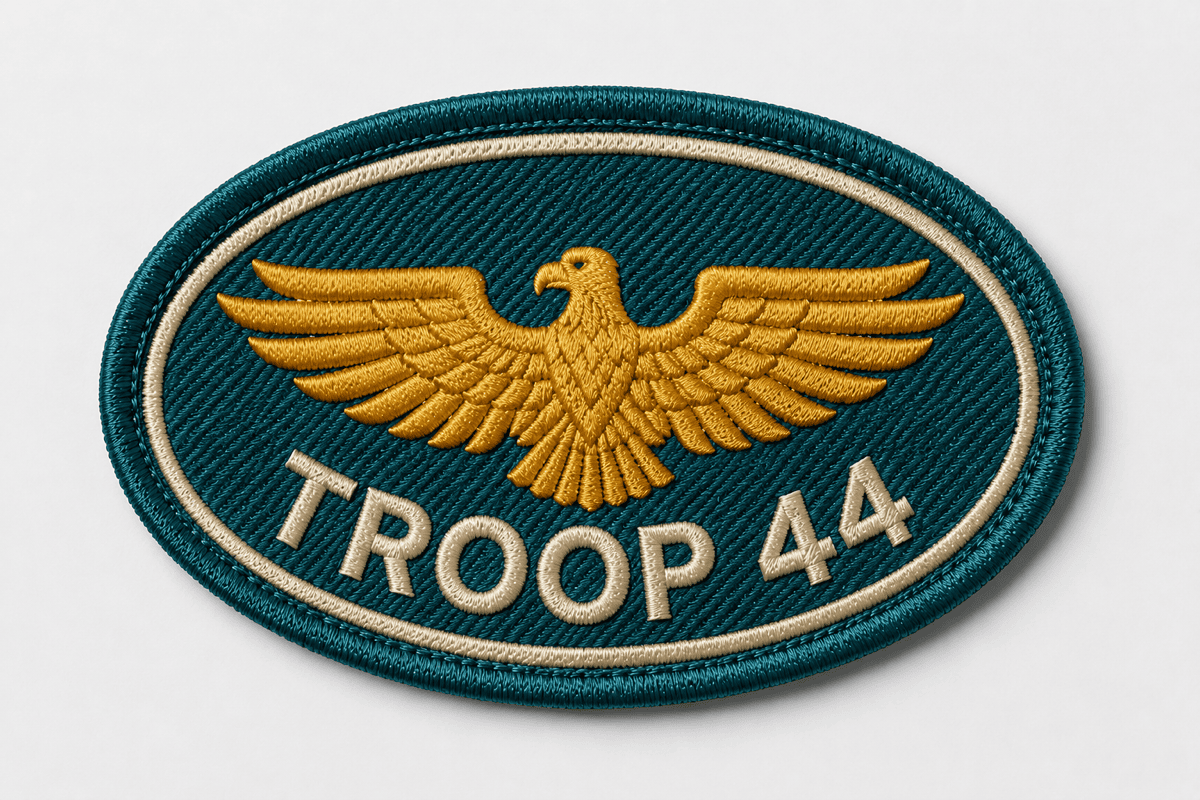
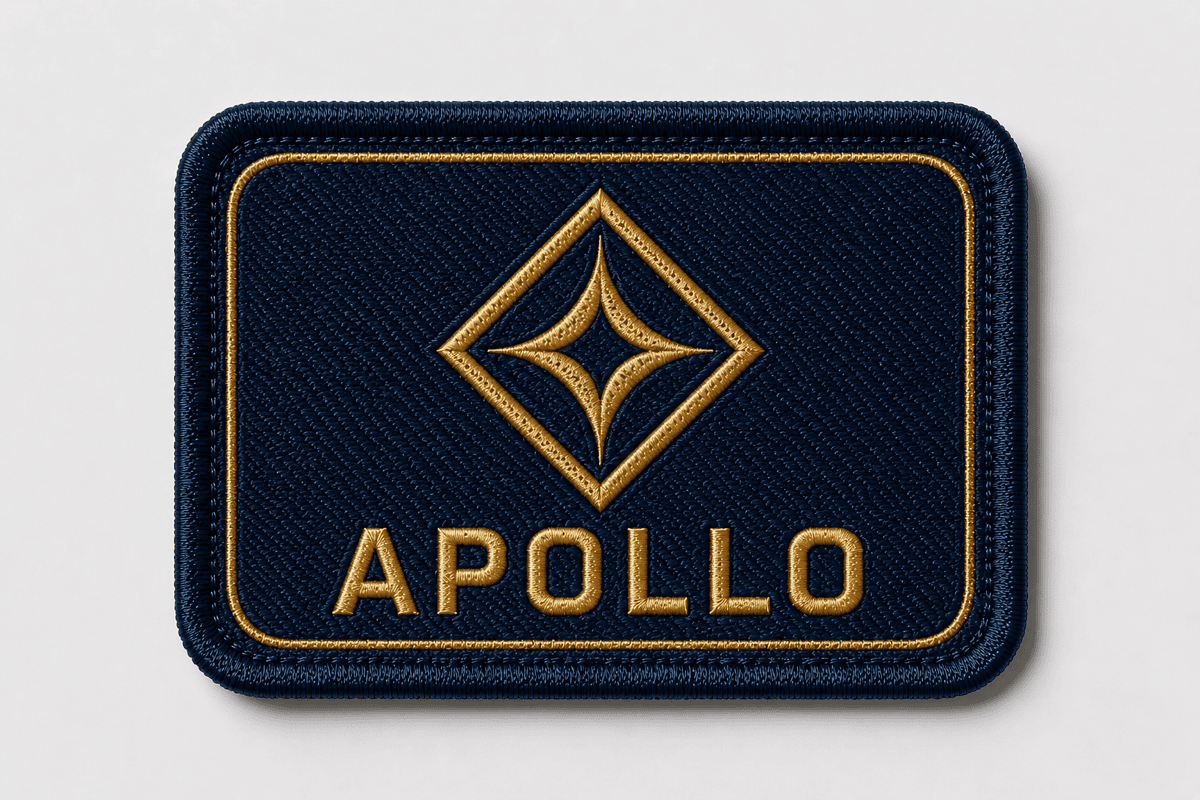
Embroidered work from our floor.
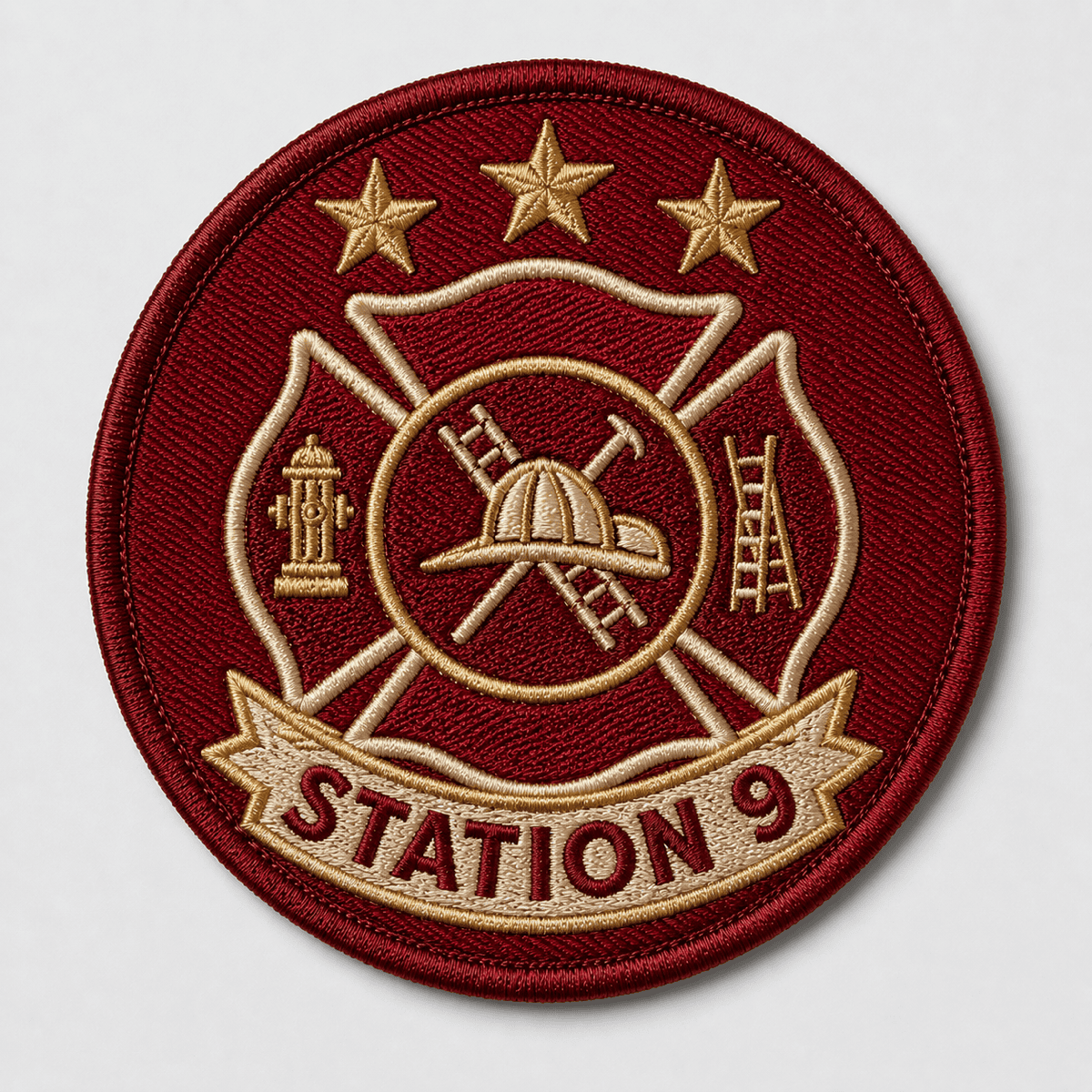
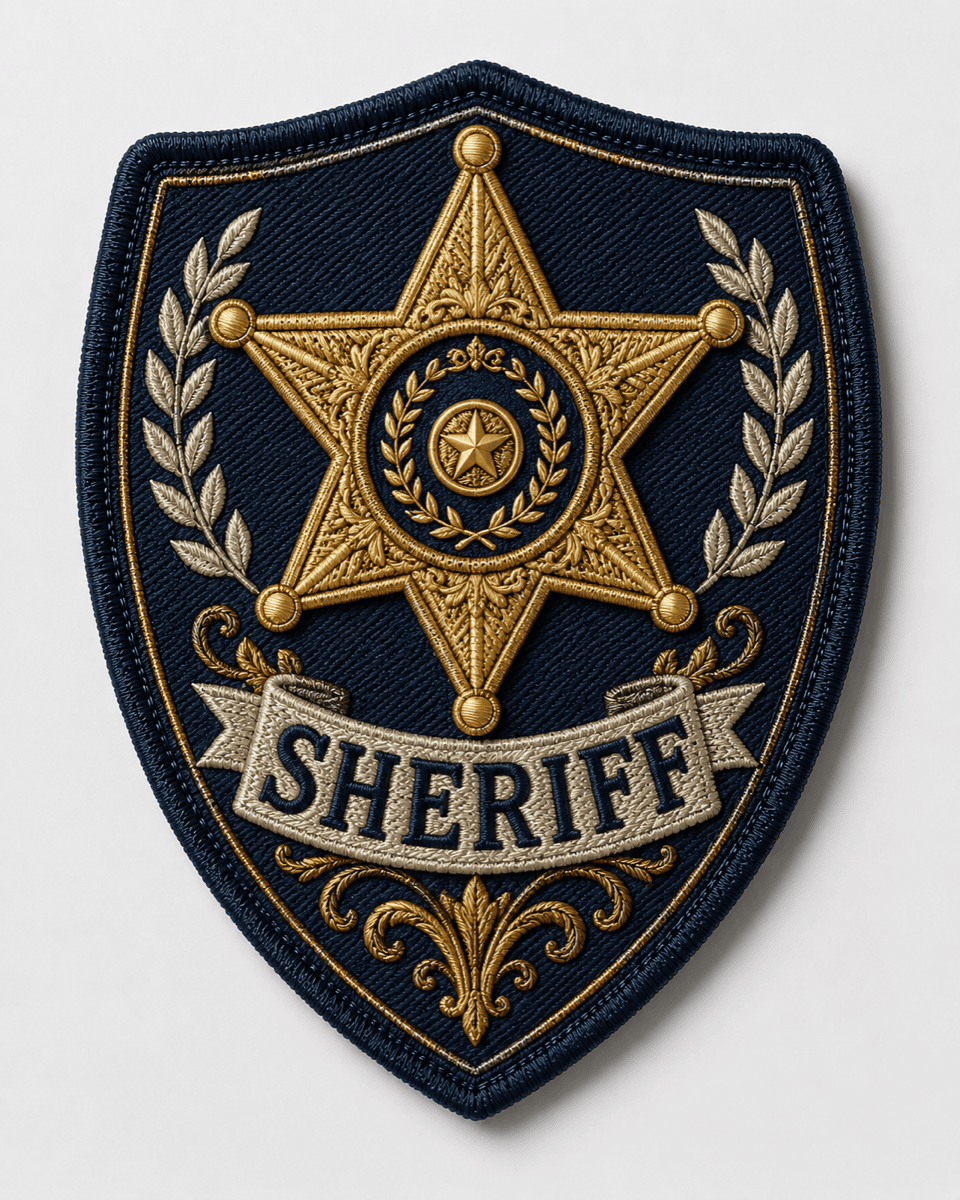
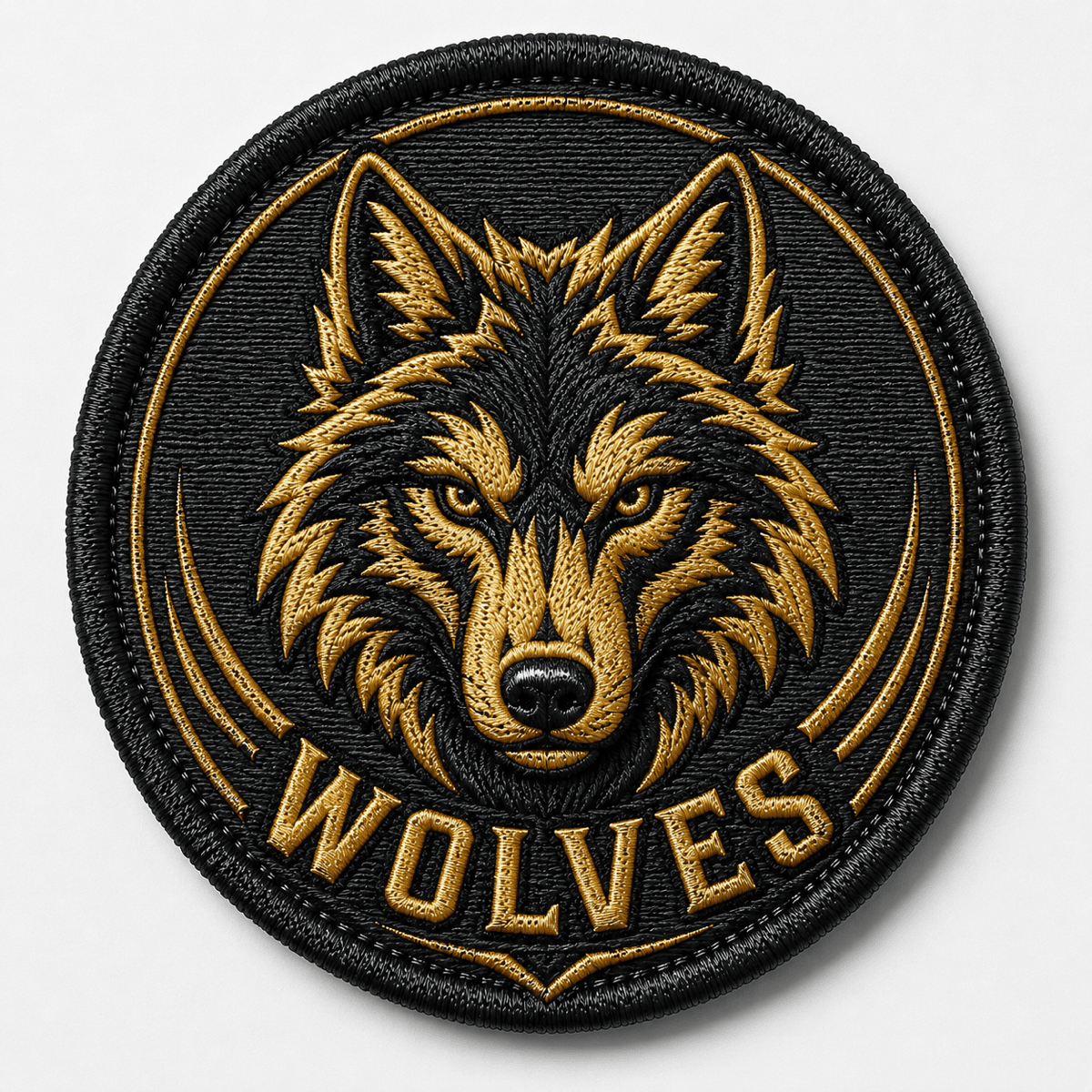
Six embroidered patches with their actual specs. Every shape, color count, and backing shown here is something we run as standard. There are more in the full patch library, where you can zoom in on the stitch detail.
What the method gives you that others don't.
Texture that reads as quality
The raised stitch face catches light and gives the patch visible depth. It is the difference between something that looks applied to a garment and something that looks part of it.
Color that cannot fade off
Thread is dyed through, not printed on. There is no surface layer to crack or lift, so the patch survives industrial laundering and years of outdoor wear.
A sealed, merrowed perimeter
The rolled thread border wraps the raw edge of the twill. No fraying, no unraveling at the corners, which is where cheaper patches fail first.
Forgiving on imperfect artwork
Embroidery simplifies as it stitches, so a logo that is slightly rough at the edges often comes out cleaner as a patch than it looks on screen.
What people order embroidered patches for.
Service and trade uniforms
Fire, EMS, security, and field crews. Sew-on or velcro so the patch outlives the shirt and can move to the next one.
Jackets and workwear
Denim, canvas, and leather take embroidery well. The stiff patch body sits flat against heavyweight fabric without puckering.
Caps and hats
Keep the patch inside 3 inches wide so it sits on the front panel without wrapping around the seam. Sew-on holds best on structured caps.
Clubs and chapters
Rockers, center pieces, and rank markers. See the dedicated biker and MC page for full three-piece back sets.
Teams and youth groups
Scouts, leagues, and school programs. Color counts stay low and the artwork is usually bold, which is ideal for embroidery.
Retail and merch
Applied to caps, totes, and outerwear, or sold on card as a standalone piece. Iron-on suits merch where the buyer applies it themselves.
Running a motorcycle club or auto club? Our biker and MC page covers back patches, rockers, and chapter sets specifically. Ordering for caps? Embroidered hat patches covers the sizes and backings that suit a cap front.
The choices you'll make.
Four decisions shape an embroidered patch. Everything below is a standard option, priced exactly as shown in the calculator.
Size and shape
Our standard line runs 2 × 2, 3 × 3, 4 × 4, 5 × 5, and 7 × 7 inches, and pricing is based on the finished size you select when you quote. For a non-standard shape, send the finished width and height and we confirm the right size before production. Shape itself is free. Circles, shields, ovals, rectangles, banners, and custom die-cut outlines all cost the same at a given size. For a size beyond that, a specialty finish, or an oversized back-patch panel, we quote by hand within 4 hours. Not sure what size you need? Our patch size and placement guide shows common sizes for hats, chests, sleeves and bags.
Thread coverage
Coverage sets how much twill is filled with thread. 75% is the default and suits almost every logo. 100% covers the whole face for a denser, more premium feel and adds 18%. 50% leaves the twill visible as part of the design, which works for simple marks.
Border
Merrowed edge is standard: a rolled thread border around the perimeter, available in any thread color so it can frame the design or disappear into it. For shapes with tight interior curves that a merrow machine cannot follow, we finish with a stitched satin border, which seals the edge just as well and allows sharper detail in the outline.
Backing
Three backings, priced as flat per-patch add-ons. If you are weighing them up, the backing guide compares how each one wears and washes.
| Backing | Price | Best for |
|---|---|---|
| Sew-on | Included | Permanent placement on jackets, uniforms, and caps. The longest-lasting option. |
| Iron-on | +$0.15 each | Heat-applied to stable woven fabric. Popular for merch where the buyer applies it. |
| Velcro (hook and loop) | +$0.55 each | Removable placement on tactical and service gear. Both sides included. |
We do not offer peel-and-stick adhesive backing. Our manufacturer flags it as unreliable over time, so we leave it off the menu rather than sell something that fails.
Matched to Pantone, confirmed before we stitch.
Screen color and thread color are different things, so we never work from a JPEG and hope. Every design is specified in Pantone (PMS) codes, and those exact codes appear on your Digital Mockup for you to confirm before anything goes to a machine. If your brand already has PMS values, send them and we match to them directly.
Once you approve, those codes are written into a permanent design record. That record is what makes reorders easy: a reorder starts from the same Pantone codes, the same dimensions, and the same stitch file, instead of from scratch. You can browse our thread color chart to see the palette we stock.
You see it before it exists.
Send whatever you have
Vector art is ideal, but a clean PNG, a JPEG, or a photo of an existing patch is enough to start. If the artwork needs rebuilding, we say so up front.
Digitizing turns art into stitches
We convert your artwork into the machine stitch file, and that work is included in the patch price. No setup fee on the first order, and none on a reorder.
Free mockup, unlimited revisions
Your Digital Mockup arrives within 24 hours with Pantone codes and exact dimensions. Change it as many times as you need. Mockup revisions are free.
Bulk production only after you approve
We never auto-approve a proof. You approve the Digital Mockup, then the Production Proof, an actual finished patch photographed for you. Bulk Production starts only on that second approval, and it is what locks your design record.
New to this? How to design a custom patch walks through the artwork decisions before you order, and our digitizing service covers the stitch-file step in detail.
Real prices, published.
Per-patch price for embroidered patches at 75% coverage with sew-on backing. These are the same numbers the calculator produces, not a teaser rate.
| Size | 25 pcs | 50 pcs | 100 pcs | 500 pcs | 1,000 pcs |
|---|---|---|---|---|---|
| 2 × 2 in | $5.58 | $3.60 | $3.20 | $2.50 | $1.90 |
| 3 × 3 in | $6.51 | $4.20 | $3.90 | $2.90 | $2.30 |
| 4 × 4 in | $7.44 | $4.80 | $4.50 | $3.20 | $2.50 |
| 5 × 5 in | $9.61 | $6.20 | $5.50 | $3.90 | $3.20 |
| 7 × 7 in | $14.72 | $9.50 | $7.50 | $6.50 | $5.20 |
Digitizing, included
Building your stitch file is part of the patch price. No setup fee, and nothing extra on a reorder either.
No setup fees, free US shipping
No plate charges, no art fees, just our 25-piece Small Run minimum. The price you see is the price you pay.
Coverage and backing
100% coverage adds 18%. Iron-on adds $0.15 per patch, velcro $0.55. Need it sooner? Ask about rush availability.
Quotes hold for 30 days. The full pricing page breaks down every add-on, and how much custom patches cost explains what actually moves the number.
Four steps, no waiting on a salesperson.
- 01
Price it
Build your spec in the calculator and see the real number instantly. Upload artwork while you are there.
- 02
Digital Mockup
A free digital mockup with Pantone codes lands within 24 hours. Revise it as often as you like.
- 03
Production Proof
We make one finished patch and photograph it for you, approximately a week later. Your design record locks when you approve it.
- 04
Bulk Production
The rest of your order is produced once you have approved the Production Proof and your balance is paid. About two weeks.
- 05
It ships
7 to 14 day air shipping with tracking, free within the US. Have a deadline? Let us know and we'll confirm what's possible.
Embroidered patch questions, answered.
What does embroidery coverage mean, and which should I choose?+
Coverage is how much of the twill backing is filled with thread. At 75%, our default, the design is stitched and a little backing shows through as part of the look. At 100% the entire face is covered in thread, which gives a denser, heavier patch and costs 18% more. At 50% the backing is a deliberate design element, which suits simple marks and keeps the patch lighter. If you are unsure, 75% is the right call for most logos.
Will the edges of an embroidered patch fray?+
No. Every patch we make gets a merrowed edge, which is a rolled border of thread wrapped around the perimeter so there is no raw twill exposed. It is the reason a well-made patch survives years of washing and wear. For shapes a merrow machine cannot follow, such as intricate die-cut outlines, we use a stitched satin border instead, which seals the edge the same way.
Can you embroider a photograph or a color gradient?+
Not faithfully. Embroidery builds an image from solid blocks of thread, so it renders flat color and clean shapes beautifully but cannot reproduce a photograph or a smooth gradient. We can suggest a limited palette that captures the spirit of the artwork, and we will tell you honestly at the mockup stage if your design is fighting the medium. For photographic artwork, a printed method is the better fit.
How many stitches go into an embroidered patch?+
Roughly 10,000 stitches for a 2 inch patch, 17,500 for a 3 inch, and about 30,000 for a 4 × 4. Stitch count is what drives machine time, and machine time is what drives cost, which is why a larger patch costs more than a small one at the same quantity.
Can embroidered patches go on stretchy or knit fabric?+
They can, with the right backing and a bit of care. An embroidered patch is a stiff, dense panel, so on a knit beanie or a stretch performance fabric it will not move with the garment. Sew-on is the right choice there, stitched around the merrowed edge so the patch is anchored without relying on adhesive. Iron-on backing needs a stable woven fabric and steady heat, so it is not suited to knits or waterproof shells.
The audiences this build was made for.
Embroidery suits buyers who want a patch to look traditional and survive a decade of wear. Three that order it constantly:
Not sure embroidered is the right fit?
We make three types. Each one suits a different kind of artwork.
Get your embroidered patches priced.
Build your spec and see a real per-patch price in under a minute. Free mockup within 24 hours, no setup fees, 25-piece minimum.